Developing a Model Based on Tax Productivity Enhancement Indicators Using Interpretive Structural Modeling
Keywords:
productivity enhancement, tax productivity, taxationAbstract
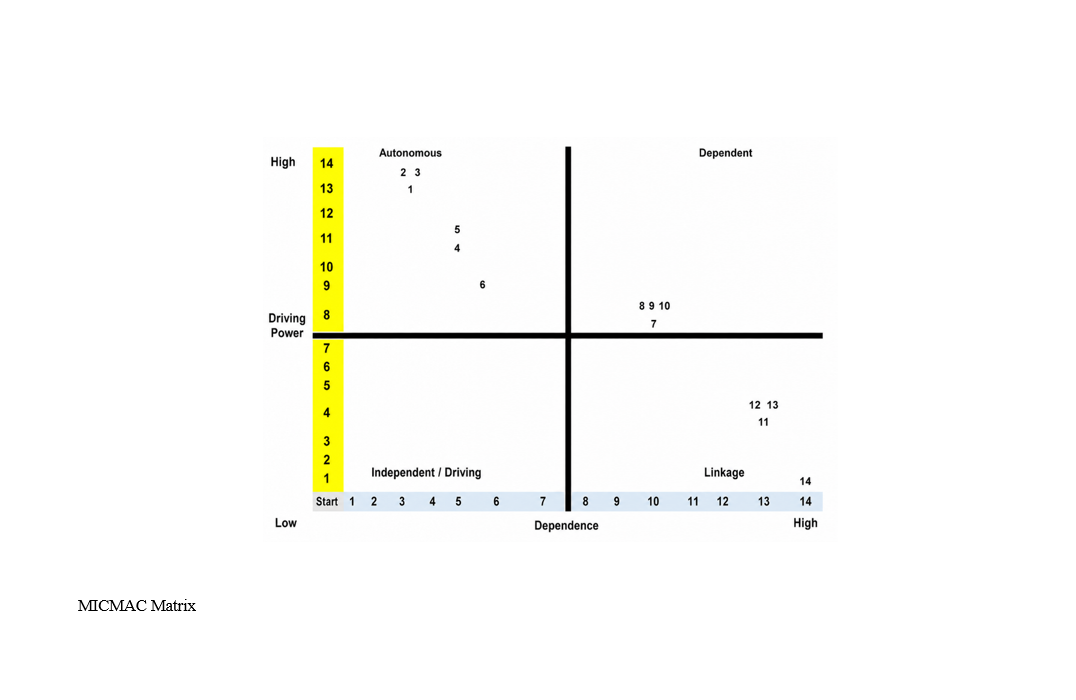
This study aimed to develop a model based on tax productivity enhancement indicators using an interpretive structural modeling approach. To identify and explain the relationships among key tax-related indicators, the required data were collected through semi-structured interviews with 18 tax experts. To analyze the data and establish hierarchical levels among the influential factors, Interpretive Structural Modeling (ISM) was employed within a qualitative framework. The findings of the ISM model indicate that “productive tax revenues” are positioned at the first level and represent the most dependent factor in the model. At the second level are indicators related to economic activity, including taxation of investment, taxation of competitiveness, and taxation of innovation. These indicators influence productive tax revenues while themselves being affected by factors located at lower levels. The third level comprises indicators related to corporate behavior, including taxation of corporate profitability, taxation of cash flow, taxation of capital structure, and taxation of dividend distribution. The “tax incentives” indicator is positioned at the fourth level and plays an important role in directing the factors located at higher levels. At the fifth level are administrative efficiency indicators, including tax administration costs and the tax evasion rate. Finally, “tax rate and tax base indicators,” comprising the effective tax rate, statutory tax rate, and tax base, are positioned at the lowest level of the model and are identified as the most influential factors. The hierarchical structure derived from this study provides a coherent framework for analyzing and enhancing tax productivity and can serve as a foundation for effective policymaking within the national tax system.
References
[1] G. Giriuniene and L. Giriūnas, "Identification of the Complex Tax System Evaluation Criteria: Theoretical Aspect," Journal of Security and Sustainability Issues, vol. 7, no. 2, pp. 258-265, 2017, doi: 10.9770/jssi.2017.7.2(7).
[2] M. Maddah, M. Shafiei Nikabadi, and N. Samiei, "Examining and Determining Optimal Tax Rates Consistent with the Optimal Level of Demand for Public Goods," Tax Research Journal, vol. 24, no. 30, pp. 65-105, 2016.
[3] M. Saraei, V. Rostami, M. Rasekh, and Y. Dadgar, "Mechanisms for Achieving an Optimal Tax System in Light of Economic Policies," Administrative Law Quarterly, vol. 9, no. 28, pp. 95-114, 2021.
[4] B. Mousavi, H. Farazmand, S. A. Arman, and S. A. Mansouri, "Tax System Reform and the Dynamics of Macroeconomic Variables in Iran: A Dynamic Stochastic General Equilibrium (DSGE) Approach," Tax Research Journal, vol. 30, no. 54, pp. 7-28, 2022.
[5] Y. Li and J. Song, "A Comparative Study of Carbon Tax and Fuel Tax Based on Panel Spatial Econometric Model," Environmental Science and Pollution Research, vol. 29, pp. 15931-15945, 2022, doi: 10.1007/s11356-021-16650-z.
[6] N. M. Lasloom and E. Grigorieva, "Financial and Tax Risks Modeling of a Multinational Company," International Journal of Business and Economic Development, vol. 9, no. 2, pp. 73-80, 2022.
[7] M. Akbari, F. Ahmadi, H. Shomakhi, and M. H. Ranjbar, "Presenting a Model for Calculating a Comprehensive Corporate Tax Avoidance Index," Management Accounting and Auditing Knowledge, vol. 11, no. 41, pp. 1-18, 2022.
[8] E. N. Mukaya and S. Karvounis, "How Companies Respond to Media Criticism for Tax Avoidance Strategies," 2018. [Online]. Available: https://www.semanticscholar.org/paper.
[9] C. Yuan, Y. Li, and T. Hu, "Does Corporate Donation Lead to More Tax Aggressiveness?," China Economic Quarterly International, vol. 2, no. 1, pp. 29-41, 2022, doi: 10.1016/j.ceqi.2022.02.002.
[10] H. Sayadzandi, A. Irajpour, and N. Hamidinia, "Designing an Agile Value-Added Tax Ecosystem Model Using a Combined Grounded Theory and Interpretive Structural Modeling Approach," Development and Transformation Management, vol. 20, no. 68, pp. 33-47, 2025.
[11] T. T. T. Nguyen, B. T. Pham, D. Prior, and S. Hemmen, "Performance of Tax Simplification Around the World: A Panel Frontier Analysis," Socio-Economic Planning Sciences, vol. 80, p. 101154, 2022, doi: 10.1016/j.seps.2021.101154.
[12] K. S. Nkundabanyanga, P. Mvura, D. Nyamuyonjo, J. Opiso, and Z. Nakabuye, "Tax Compliance in a Developing Country: Understanding Taxpayers' Compliance Decision by Their Perceptions," Journal of Economic Studies, vol. 44, no. 6, pp. 931-957, 2017, doi: 10.1108/JES-03-2016-0061.
[13] A. Young, L. Lei, B. Wong, and B. Kwok, "Individual Tax Compliance in China: A Review," International Journal of Law and Management, vol. 58, no. 5, pp. 562-574, 2016, doi: 10.1108/IJLMA-12-2015-0063.
[14] L. L. Heng, M. N. Alifiah, and L. E. Chen, "A Proposed GST Compliance Model of GST Registered Entity in Malaysia," International Journal of Recent Technology and Engineering, vol. 8, no. 1S, pp. 200-206, 2019.
[15] M. Kasper and J. Alm, "Audits, Audit Effectiveness, and Post-Audit Tax Compliance," Journal of Economic Behavior and Organization, vol. 195, pp. 87-102, 2022, doi: 10.1016/j.jebo.2022.01.003.
[16] E. Rainone, "Tax Evasion Policies and the Demand for Cash," Journal of Macroeconomics, vol. 76, p. 103520, 2023, doi: 10.1016/j.jmacro.2023.103520.
Downloads
Publication Timeline
- Submitted
- Revised
- Accepted
Issue
Section
License
Copyright (c) 2025 Feyzollah Asadi Shavaki (Author); Farshad Sameni Keivani (Corresponding author); Elmira Mashayekhi Nezamabadi (Author)

This work is licensed under a Creative Commons Attribution-NonCommercial 4.0 International License.