Identification and Evaluation of the Customer Engagement Model with Domestic Home Appliance Brands
DOI:
https://doi.org/10.61838/msesj.321Keywords:
Marketing, Brand Management, Customer Engagement, Home Appliance IndustryAbstract
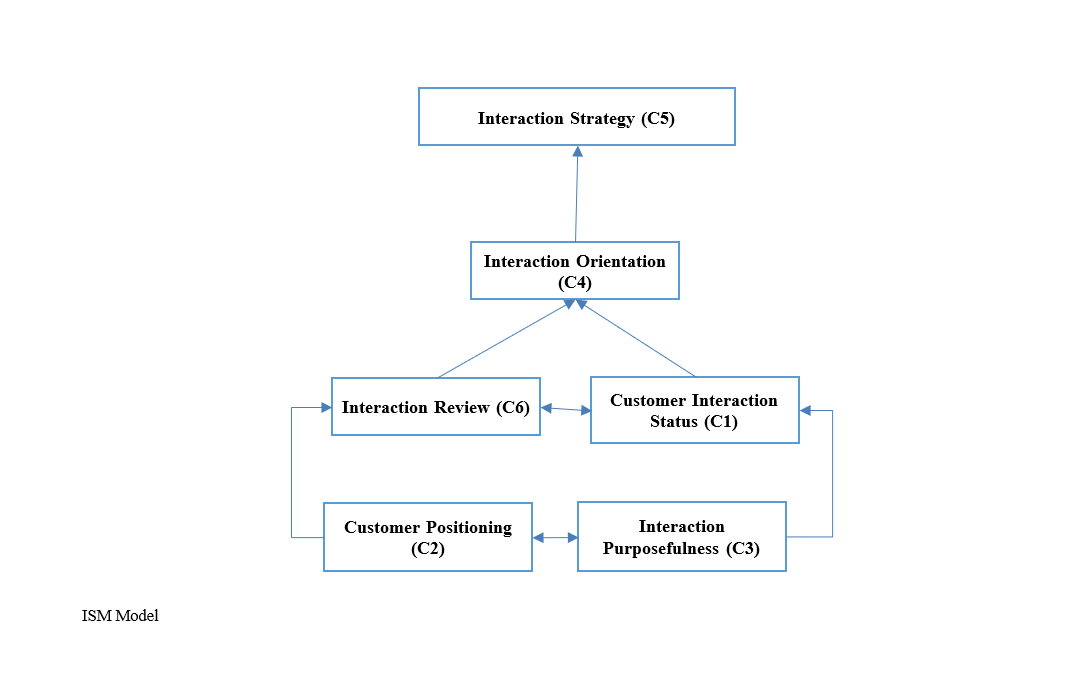
The purpose of this study was to identify and evaluate the customer engagement model with domestic home appliance brands. The research was conducted using an exploratory and survey-based design. In the qualitative phase, the Delphi method was employed, and in the quantitative phase, the Interpretive Structural Modeling (ISM) method and Structural Equation Modeling (SEM) were used. In the qualitative section and the ISM method, the population consisted of managers and experts in the home appliance industry in 2024, from which 16 individuals were selected through judgmental and convenience sampling. Using library research techniques, the components influencing the model were identified. First, the identified components were screened and evaluated using the Delphi technique. Subsequently, modeling was performed using both the Delphi method and the interpretive structural approach. The software tools used were EXCEL and MICMAC. The quantitative population consisted of customers of domestic home appliance brands, considered to be an unlimited population. Using Cochran’s formula, a sample of 384 participants was selected. A total of 1,000 questionnaires were distributed, of which 384 acceptable questionnaires were selected for analysis. Based on a researcher-made questionnaire derived from qualitative analysis, data analysis was carried out through coding and path analysis. Data were analyzed using coding and path analysis. Subsequently, to validate the proposed model, Structural Equation Modeling was applied in SMARTPLS software. Based on the Delphi technique, the six categories include: customer interaction status, customer positioning, interaction purposefulness, interaction orientation, interaction strategy, and interaction review. As a result, in the customer engagement model with domestic home appliance brands, the statement “interaction purposefulness and customer positioning are the most influential components” implies that these two components play a key and vital role in establishing and strengthening the relationship between the brand and its customers. Purposeful interaction refers to designing and guiding interactions in a way that accurately and effectively meets customer needs and expectations. This component helps the brand utilize every engagement opportunity purposefully, ensuring not only that customers’ immediate needs are satisfied but also that a long-term and sustainable relationship is formed. Purposeful interactions make customers feel that the brand understands and values them, which enhances their engagement and loyalty to the brand.
References
[1] P. Sharma, K. Jain, R. P. Kingshott, and A. Ueno, "Customer engagement and relationships in multi-actor service ecosystems," Journal of Business Research, vol. 121, pp. 487-494, 2020, doi: 10.1016/j.jbusres.2020.07.031.
[2] D. Hoang, S. Kousi, L. F. Martinez, and S. Kumar, "Revisiting a model of customer engagement cycle: a systematic review," The Service Industries Journal, vol. 43, no. 9-10, pp. 579-617, 2023, doi: 10.1080/02642069.2023.2202912.
[3] B. Rajan, U. Salunkhe, and V. Kumar, "Understanding customer engagement in family firms: A conceptual framework," Journal of Business Research, vol. 154, p. 113342, 2023, doi: 10.1016/j.jbusres.2022.113342.
[4] S. Torkzadeh, M. Zolfagharian, A. Yazdanparast, and D. D. Gremler, "From customer readiness to customer retention: the mediating role of customer psychological and behavioral engagement," European Journal of Marketing, vol. 56, no. 7, pp. 1799-1829, 2022, doi: 10.1108/EJM-03-2021-0213.
[5] J. Davey, I. O'Brien, R. Ouschan, and J. Parkinson, "Rethinking customer engagement design: Using customer-mobilized engagement (CME) to grow business networks," Industrial Marketing Management, vol. 105, pp. 453-466, 2022, doi: 10.1016/j.indmarman.2022.07.001.
[6] A. Castillo, J. Benitez, J. Llorens, and X. R. Luo, "Social media-driven customer engagement and movie performance: Theory and empirical evidence," Decision Support Systems, vol. 145, p. 113516, 2021, doi: 10.1016/j.dss.2021.113516.
[7] M. Delbaere, B. Michael, and B. J. Phillips, "Social media influencers: A route to brand engagement for their followers," Psychology & Marketing, vol. 38, no. 1, pp. 101-112, 2021, doi: 10.1002/mar.21419.
[8] G. Hani, S. W. Haider, A. Raza, S. C. e. Silva, and J. C. Dias, "Digital Influencers: Catalysts for Customer Engagement and Purchase Intention," Studia Universitatis Babe-Bolyai Oeconomica, vol. 69, no. 2, pp. 40-61, 2024, doi: 10.2478/subboec-2024-0009.
[9] L. Zhao, M. Zhang, Y. Ming, T. Niu, and Y. Wang, "The effect of image richness on customer engagement: Evidence from Sina Weibo," Journal of Business Research, vol. 154, p. 113307, 2023, doi: 10.1016/j.jbusres.2022.113307.
[10] A. Shekari, M. Poursaeed, and S. Deh Yadgari, "Examining the Impact of Content Characteristics on Customer Engagement in Social Networks with a Data Mining Approach: A Case Study of Instagram," Business Management, vol. 17, no. 1, pp. 201-233, 2025. [Online]. Available: https://journals.ut.ac.ir/article_97346.html?lang=en.
[11] I. Tribak, "The impact of content marketing as a sponsorship activation strategy on online customer engagement," Prosperitas, vol. 12, no. 2, pp. 1-38, 2025, doi: 10.31570/prosp_2025_0137.
[12] K. M. Nguyen, N. T. Nguyen, T. T. X. Pham, N. H. M. Tran, N. C. B. Cap, and V. K. Nguyen, "How ephemeral content marketing fosters brand love and customer engagement," Spanish Journal of Marketing-ESIC, 2025, doi: 10.1108/SJME-04-2024-0089.
[13] Z. Ghali, R. A. Rather, and I. Khan, "Investigating metaverse marketing-enabled consumers' social presence, attachment, engagement and (re) visit intentions," Journal of Retailing and Consumer Services, vol. 77, p. 103671, 2024, doi: 10.1016/j.jretconser.2023.103671.
[14] H. Shen, C. Zhao, D. X. Fan, and D. Buhalis, "The effect of hotel livestreaming on viewers' purchase intention: Exploring the role of parasocial interaction and emotional engagement," International Journal of Hospitality Management, vol. 107, p. 103348, 2022, doi: 10.1016/j.ijhm.2022.103348.
[15] H. Shin and R. R. Perdue, "Developing creative service ideas through hotel customer engagement for open innovation: Focused on empowerment and motivation processes," International Journal of Hospitality Management, vol. 100, p. 103077, 2022, doi: 10.1016/j.ijhm.2021.103077.
[16] P. Singhal, "Understanding the Usability and Response Quality of Artificial Intelligence Chatbots on Customer Engagement in Branded Apparel E-Retailing," pp. 403-420, 2024, doi: 10.4018/979-8-3693-7620-1.ch020.
[17] K. Parsakia and M. Jafari, "Strategies for Enhancing Customer Engagement Using Artificial Intelligence Technologies in Online Markets," Journal of Technology in Entrepreneurship and Strategic Management (JTESM), vol. 2, no. 1, pp. 49-69, 05/29 2023, doi: 10.61838/kman.jtesm.2.1.6.
[18] R. Cerchione, "Design and evaluation of a blockchain‐based system for increasing customer engagement in circular economy," Corporate Social Responsibility and Environmental Management, vol. 32, no. 1, pp. 160-175, 2025, doi: 10.1002/csr.2948.
[19] R. Saral, R. Salehzadeh, and S. M. Mirmehdi, "Investigating the influence of service quality on loyalty in banking industry: the role of customer engagement," International Journal of Services, Economics and Management, vol. 15, no. 1, pp. 1-18, 2024. [Online]. Available: https://doi.org/10.1504/IJSEM.2024.136057.
[20] O. S. Itani, R. El Haddad, and A. Kalra, "Exploring the role of extrovert-introvert customers' personality prototype as a driver of customer engagement: does relationship duration matter?," Journal of Retailing and Consumer Services, vol. 53, p. 101980, 2020, doi: 10.1016/j.jretconser.2019.101980.
[21] O. Monshi, "Exploring challenges in implementing customer relationship management (CRM) for customer brand engagement (CBE) in the hospitality industry: A developing country perspective," Journal of International Business and Management, vol. 3, no. 4, pp. 1-10, 2020.
[22] O. Nechaeva, V. Mazzoli, and R. Donvito, "Brand engagement into self-concept and culture: a literature review for a future research agenda," Journal of Brand Management, vol. 30, no. 5, pp. 414-431, 2023, doi: 10.1057/s41262-023-00312-1.
[23] A. Goyal and P. Verma, "Impact of brand engagement on behavioral loyalty, brand equity and WOM through attitudinal loyalty," Journal of International Food & Agribusiness Marketing, vol. 35, no. 1, pp. 88-109, 2023, doi: 10.1080/08974438.2021.1956667.
[24] N. D. Agarwal, V. R. Kumar, and A. Gunasekaran, "Leveraging social media to examine sustainability communication of home appliance brands," Technology in Society, vol. 77, p. 102550, 2024, doi: 10.1016/j.techsoc.2024.102550.
[25] Z. a.-S. Hosseini Talu khoncheh and A. Kazemi, "Rereading the Concept of Consumer Mental Involvement on Brand Choice Through Packaging Aesthetic Elements in the Products of Production Cooperative Companies in Isfahan City," Packaging Science and Technology, vol. 15, no. 57, pp. 1-11, 2024.
[26] A. Nalchi Kashi, "Investigating the Relationship Between Customer Experience Components and Customer Commitment and Involvement Behaviors in the Retail Industry," Quarterly Journal of Value Creation in Business Management, vol. 4, no. 2, pp. 169-200, 2024.
Downloads
Publication Timeline
- Submitted
- Revised
- Accepted
Issue
Section
License
Copyright (c) 2026 Alireza Alikhani (Author); Behrooz Ghasemi (Corresponding author); Soheil Sarmadsaidy (Author)

This work is licensed under a Creative Commons Attribution-NonCommercial 4.0 International License.