Modeling a Decision-Making Framework for Spiritual-Sensitive Design: A Grounded Theory Study of User Experience Ecosystems
Keywords:
Spiritual-Sensitive Design, Interaction Ecosystem, Constructivist Grounded Theory, User ExperienceAbstract
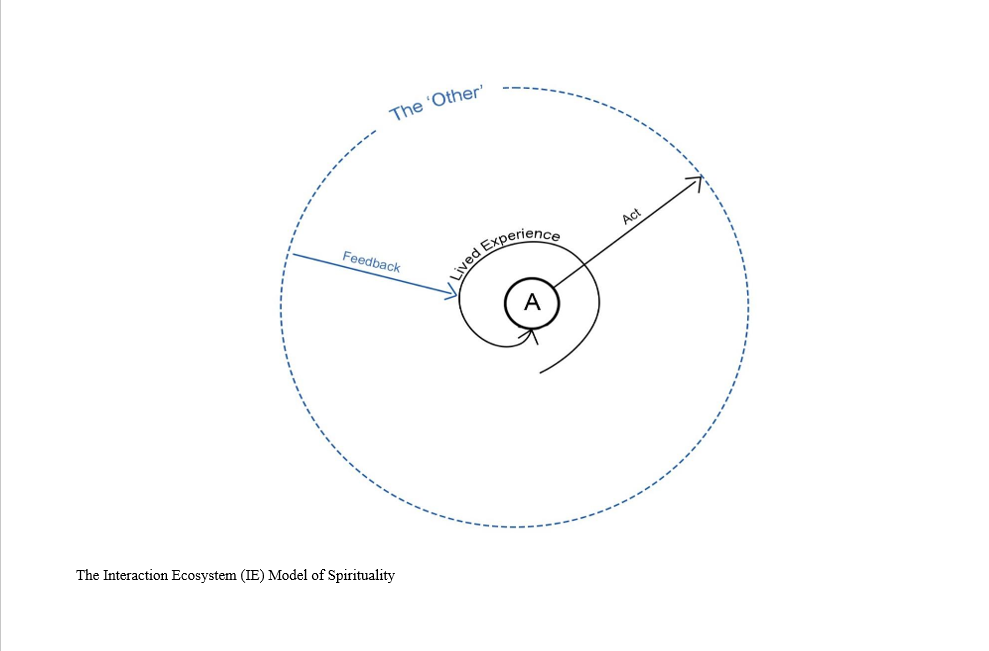
While spirituality is increasingly recognized as a significant dimension of human experience, it remains an underdeveloped area within design research. Current design approaches often treat spirituality as a static aesthetic or a fixed symbolic attribute, failing to account for its dynamic and relational nature in user experience. This study aims to bridge this gap by modeling a decision-making framework for spiritual-sensitive design, focusing on how spiritual meaning is constructed and maintained within user experience ecosystems. Using a grounded theory approach, the study conducted in depth semi structured interviews with participants from diverse cultural and professional backgrounds to explore their lived spiritual experiences. Data were analyzed through open, axial, and selective coding using the constant comparison method. This approach enabled the development of a conceptual framework grounded in participants’ narratives and revealed the iterative processes through which spiritual meanings are formed and transformed through interaction. The study identifies that spirituality functions as a dynamic Interaction Ecosystem (IE) rather than a static quality. Central to this ecosystem is the role of “The Other”, a relational entity that mediates the experience through a continuous loop of personal assumptions and lived feedback. The findings reveal a “Cycle of Spiritual Understanding,” where cognitive dissonance and experiential recalibrations drive the evolution of spiritual meaning. Furthermore, the research highlights the tension between soothing facilitators, such as materiality and nature, and repulsive factors that arise when spiritual frameworks become overly restrictive. The resulting IE Model offers a conceptual roadmap for designers to integrate spiritual sensitivity into their decision-making processes. By shifting the focus from symbolic representation to the facilitation of relational ecosystems, this research provides tangible entry points for designing products and environments that resonate with the profound complexities of human spirituality. The framework underscores the importance of interpretive openness, suggesting that spiritually sensitive design must support the fluid and iterative nature of personal meaning-making.
References
[1] E. P. Douglas, S. S. Jordan, M. Lande, and A. E. Bumbaco, "Artifact Elicitation as a Method of Qualitative Inquiry in Engineering Education," in Proceedings of the 2015 ASEE Annual Conference & Exposition, 2015, doi: 10.18260/p.2357.
[2] L. Chiu, J. D. Emblen, L. Van Hofwegen, R. Sawatzky, and H. Meyerhoff, "An Integrative Review of the Concept of Spirituality in the Health Sciences," (in English), Western Journal of Nursing Research, vol. 26, pp. 405-428, 2004, doi: 10.1177/0193945904263411.
[3] E. Weathers, "What Is Spirituality?," in Spirituality in Healthcare: Perspectives for Innovative Practice: Springer, 2019, pp. 1-22.
[4] P. Sheldrake, Spirituality: A Very Short Introduction. OUP Oxford (in English), 2012.
[5] I. Platovnjak, "The Relationship between Spirituality, Religion, and Culture," (in English), Studia Gdańskie, vol. 41, pp. 117-125, 2017. [Online]. Available: https://www.ceeol.com/search/article-detail?id=638066.
[6] U. King, The Search for Spirituality: Our Global Quest for Meaning and Fulfilment. Canterbury Press Norwich (in English), 2009.
[7] M. Malekian, Dar Rahgozar-e Bad va Negahban-e Laleh. Negah-e Moaser (in English), 2016.
[8] S. M. Hage, "A Closer Look at the Role of Spirituality in Psychology Training Programs," (in English), Professional Psychology: Research and Practice, vol. 37, no. 3, pp. 303-310, 2006, doi: 10.1037/0735-7028.37.3.303.
[9] F. L. Shults and S. J. Sandage, Transforming Spirituality: Integrating Theology and Psychology. Baker Academic (in English), 2006.
[10] H. G. Koenig, "Spirituality and Mental Health," (in English), International Journal of Applied Psychoanalytic Studies, vol. 7, no. 2, pp. 116-122, 2010. [Online]. Available: https://www.rcpsych.ac.uk.
[11] L. K. Manning, "Navigating Hardships in Old Age: Exploring the Relationship between Spirituality and Resilience in Later Life," (in English), Qualitative Health Research, vol. 23, no. 4, pp. 568-575, 2013, doi: 10.1177/1049732312471730.
[12] C. Puchalski et al., "Improving the Quality of Spiritual Care as a Dimension of Palliative Care: The Report of the Consensus Conference," (in English), Journal of Palliative Medicine, vol. 12, no. 10, pp. 885-904, 2009, doi: 10.1089/jpm.2009.0142.
[13] S. Monod, M. Brennan-Ing, E. Rochat, and E. Lécureux, "Instruments Measuring Spirituality in Clinical Research: A Systematic Review," (in English), Journal of General Internal Medicine, vol. 26, no. 11, pp. 1345-1357, 2011, doi: 10.1007/s11606-011-1769-7.
[14] D. B. Yaden et al., "The Development of the Awe Experience Scale (AWE-S): A Multifactorial Measure for a Complex Emotion," (in English), The Journal of Positive Psychology, vol. 14, no. 4, pp. 474-488, 2019, doi: 10.1080/17439760.2018.1484940.
[15] J. Milliman, J. Ferguson, D. Trickett, and B. Condemi, "Spirit and Community at Southwest Airlines: An Investigation of a Spiritual Values Based Model," (in English), Journal of Organizational Change Management, vol. 12, no. 3, pp. 221-233, 1999, doi: 10.1108/09534819910273928.
[16] D. P. Ashmos and D. Duchon, "Spirituality at Work: A Conceptualization and Measure," (in English), Journal of Management Inquiry, vol. 9, pp. 134-145, 2000, doi: 10.1177/105649260092008.
[17] J. Milliman, A. J. Czaplewski, and J. Ferguson, "Workplace Spirituality and Employee Work Attitudes: An Exploratory Empirical Assessment," (in English), Journal of Organizational Change Management, vol. 16, pp. 426-447, 2003, doi: 10.1108/09534810310484172.
[18] P. McGhee and P. Grant, "Spirituality and Ethical Behaviour in the Workplace: Wishful Thinking or Authentic Reality," (in English), EJBO: Electronic Journal of Business Ethics and Organization Studies, 2008. [Online]. Available: https://www.researchgate.net/publication/228811515.
[19] H. Syahrul, S. Nurjanah, and W. Parimita, "The Effect of Workplace Spirituality, Organizational Citizenship Behavior, Quality of Work-Life on Turnover Intention With Job Satisfaction as a Mediation: Study in Indonesian Aircraft Maintenance Industry PT GMF Aeroasia TBK," Journal of Ecohumanism, vol. 3, no. 8, 2024, doi: 10.62754/joe.v3i8.5302.
[20] R. Sode, K. Chenji, and R. Vijayaraghavan, "Exploring workplace spirituality, mindfulness, digital technology, and psychological well-being: A complex interplay in organizational contexts," Acta Psychologica, vol. 251, no. 1, p. 104601, 2024, doi: 10.1016/j.actpsy.2024.104601.
[21] A. Chowdhury, "When Spirituality Meets Creative Works and Design: A Theory on Trinity of Creative Practices," (in English), International Journal of Design and Allied Sciences, vol. 2, no. 2, pp. 68-73, 2023, doi: 10.5281/zenodo.10447628.
[22] L. Lopes, "Components of Spirituality to Safeguard Life: For the Development of an Integral Design Management Approach," (in English), DISCERN: International Journal of Design for Social Change, Sustainable Innovation and Entrepreneurship, vol. 2, no. 2, pp. 7-21, 2021.
[23] A. T. M. Nassifi, "Geometric Shapes and Their Spiritual Manifestations in Interior Design," (in English), Kurdish Studies, vol. 11, no. 2, pp. 4192-4206, 2023, doi: 10.58262/ks.v11i2.v11i2.306.
[24] S. Raghani, T. Brar, and M. Kamal, "Architectural strategies for enhancing mental well-being and spiritual engagement: A multidisciplinary approach to mindfulness-oriented design," City, Territory and Architecture, vol. 12, p. 41, 2025, doi: 10.1186/s40410-025-00292-6.
[25] G. Hofstede and G. J. Hofstede, Cultures and Organizations: Software of the Mind, 2nd ed. McGraw-Hill (in English), 2004.
[26] A. G. C. van Boeijen, "Crossing Cultural Chasms: Towards a Culture-Conscious Approach to Design," Delft University of Technology, 2015. [Online]. Available: https://studiolab.ide.tudelft.nl/studiolab/vanboeijen/files/2011/05/Doctoral-thesis-AGC-van-Boeijen.pdf
[27] K. Charmaz, "Grounded Theory: Objectivist and Constructivist Methods," in The Handbook of Qualitative Research, N. K. Denzin and Y. Lincoln Eds.: Sage, 2000, pp. 509-535.
[28] K. Charmaz, Constructing Grounded Theory. Sage (in English), 2014.
Downloads
Publication Timeline
- Submitted
- Revised
- Accepted
Issue
Section
License
Copyright (c) 2025 Encye Farahani (Author); Yasaman Khodadadeh (Corresponding author); Annemiek van Boeijen (Author)

This work is licensed under a Creative Commons Attribution-NonCommercial 4.0 International License.